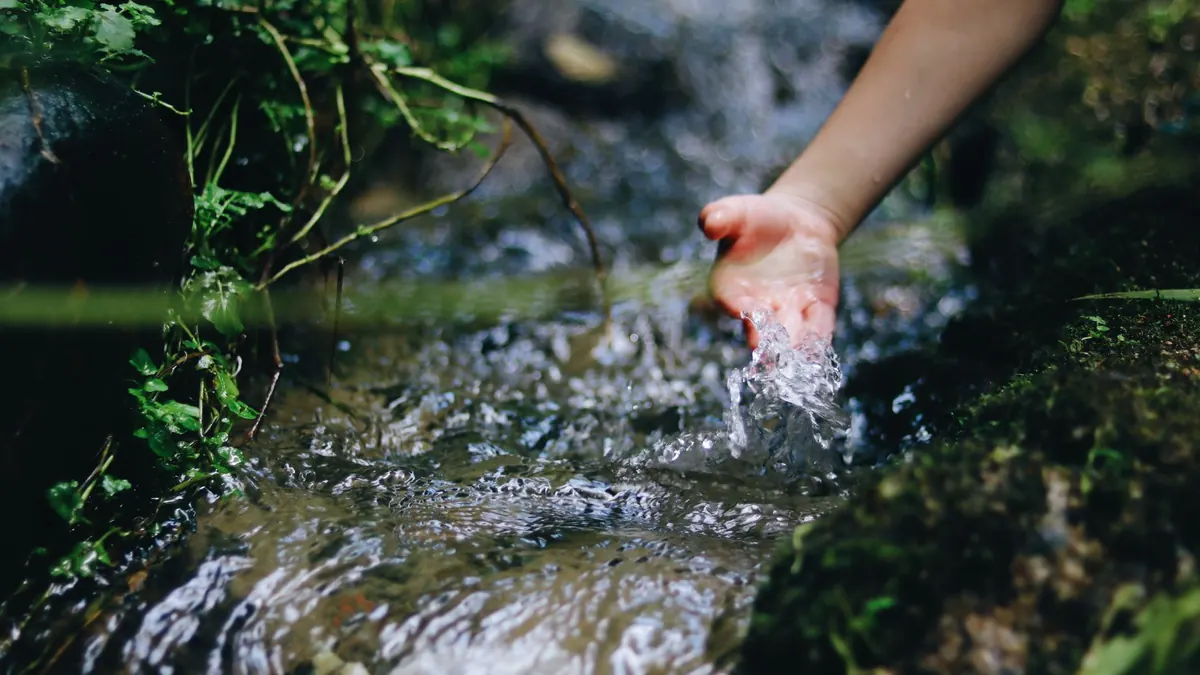
Chalk Brooks vs Acid Brooks: How Geology Shapes UK Stream Life
Stand beside a chalk brook in southern England and you might see water crowfoot streaming in the current like green hair, pale gravel shining below, and a mayfly nymph clinging to a stone. Walk an upland acid brook in Wales, the Pennines or the Scottish Highlands and the same rush of water can look entirely different: tea-coloured, peat-edged, mossy, quieter in its variety but just as alive. Both are brooks. Both can be clean and precious. Geology decides much of the guest list.
Two Brooks, Two Chemistries
Chalk and limestone are made of calcium carbonate. Rainwater, slightly acidic after picking up carbon dioxide from the air and soil, percolates through them and dissolves minerals. The water that emerges is alkaline, hard and well buffered. A chalk brook often sits around pH 7.5 to 8.2, with plenty of calcium and bicarbonate. That buffering matters: it helps the water resist sudden shifts in acidity.
Acid brooks rise on granite, slate, gritstone, sandstone or deep peat. Rainwater runs quickly over the surface or through thin, mineral-poor soils, gathering organic acids from peat and vegetation instead of calcium. The result is soft, often acidic water, frequently below pH 6.5 and sometimes much lower. These are broad ranges, not fixed labels. A brook can change after heavy rain, and a single catchment can hold both alkaline and acidic reaches.
The chemistry shapes everything downstream: what plants can root, which invertebrates can build shells or exoskeletons, and how productive the whole food web becomes. Neither type is better. They are simply different solutions to the same problem of living in flowing water.
Clarity, Colour and Flow
Chalk brooks are famous for clarity. Groundwater-fed, they tend to run steady and cool, with pale gravel, low suspended sediment and a relatively stable temperature. In summer, some upper reaches shrink or even disappear into winterbournes, then return when the water table rises. That steadiness supports plants and animals that cannot cope with frequent drying or scouring.
Acid brooks are more flashy. They rise quickly after rain, carrying peat-stained water that looks like weak tea. The colour comes from dissolved organic matter, not necessarily silt. On a dry day, an acid brook can be surprisingly clear, with dark stones and bog moss along the margins. After a spate, it may run brown and high, then fall back fast. Clarity alone can mislead you: a dark acid brook may be low in fine sediment, while a chalk brook can turn cloudy after livestock access or road runoff.
Plant Life: Water Crowfoot to Sphagnum
In chalk brooks, look for water crowfoot, water starwort, brooklime, watercress and a range of mosses rooted in gravel. These plants need light, clean water and a stable bed. Filamentous algae can appear in both brook types, often where nutrients are elevated, but chalk brooks are more likely to support lush flowering aquatic plants.
Acid brooks suit a different flora. Sphagnum mosses, liverworts, rushes, cotton grass and heather dominate the edges and sometimes the channel itself. Peat builds up where dead plant material accumulates in cold, waterlogged, oxygen-poor conditions. Many chalk specialists struggle here because calcium is scarce and acidity limits nutrient uptake. Acid mosses, by contrast, are built for these conditions.
Invertebrates: The Calcium Divide
Calcium is building material. Snails, mussels and crustaceans need it for shells or exoskeletons. Chalk brooks often teem with Gammarus shrimp, mayfly nymphs, caddis larvae, flatworms, leeches and freshwater snails. Turn a stone in a healthy chalk brook and the underside may be crowded. Acid brooks support stonefly nymphs, caddis larvae, dragonfly larvae, diving beetles and other acid-tolerant groups. Snails and crustaceans are usually scarcer, and some mayfly families are absent or rare.
Caddis larvae show the divide nicely. Some build cases from sand grains, others from plant fragments; calcium availability and water chemistry influence which species thrive. In acid water, the community is often less diverse in calcium-dependent groups but can include specialised species found nowhere else. That specialism is part of what makes acid brooks worth protecting.
Fish, Birds and the Wider Food Web
Chalk brooks are among Britain’s most productive streams. Brown trout, grayling, bullhead, brook lamprey and minnow are typical, with coarse fish appearing in slower, lower reaches. Kingfishers, herons, grey wagtails and otters all make use of the rich invertebrate life. Water voles, where they survive, favour the soft banks and lush vegetation.
Acid brooks are less productive but still valuable. Brown trout may be present, along with salmon in suitable catchments, and sticklebacks are common. Coarse fish such as roach or chub are usually scarce or absent where acidity is pronounced. Dippers and grey wagtails feed along the riffles, and dragonflies hunt the pools and boggy edges. The food web is leaner, but it is adapted to the conditions and can be remarkably resilient when the peat and hydrology remain intact.
Conservation: Different Problems, Different Fixes
Chalk brooks face over-abstraction, sewage discharges, agricultural nutrients, dredging, straightening and barriers. Restoration usually means restoring flow, cleaning gravel, planting buffer strips and reconnecting the brook to its floodplain. Acid brooks face acid deposition, conifer planting, peat drainage, erosion and climate-driven changes in rainfall. Here, protection means keeping peat wet, blocking drainage ditches, reducing atmospheric pollution and avoiding unnecessary forestry disturbance.
Applying the same management template to both would be a mistake. A chalk brook needs steady, mineral-rich water and light. An acid brook needs clean rain, intact peat and natural boggy margins. Good conservation starts by reading the geology and working with it.
Practical: Reading a Brook for Yourself
You do not need a laboratory to notice the difference. A few careful observations will tell you a great deal.
- Look at the bed. Pale gravel and marl suggest chalk or limestone. Dark stones, peat and Sphagnum suggest acid conditions.
- Check the water colour. Gin-clear water with a greenish tint points to chalk. Tea-coloured water, especially after rain, points to peat.
- Note the flow. Steady, spring-fed flow suggests chalk. Flashy spates and low summer flows suggest an acid upland brook.
- Test alkalinity if you can. Alkalinity is a better field clue than pH alone, because pH shifts through the day and after rain.
- Scan for indicator species. Water crowfoot, Gammarus and snails favour chalk. Sphagnum, stoneflies and dragonflies favour acid water.
- Record conditions. Date, recent rain, water level and temperature help you interpret what you see.
Take care while you explore. Ask permission before entering private water, avoid walking on gravel redds in spawning season, and return any stones you lift exactly as you found them. If you use nets or boots in more than one brook, clean and dry them between visits to avoid spreading disease or invasive species.
The next time you cross a footbridge, pause and look again. The colour, the bed and the wildlife are all telling you what lies beneath the catchment. Chalk or acid, both brooks are records of their geology — and both reward a closer look.
Photo: Yaseminmsl / Pexels