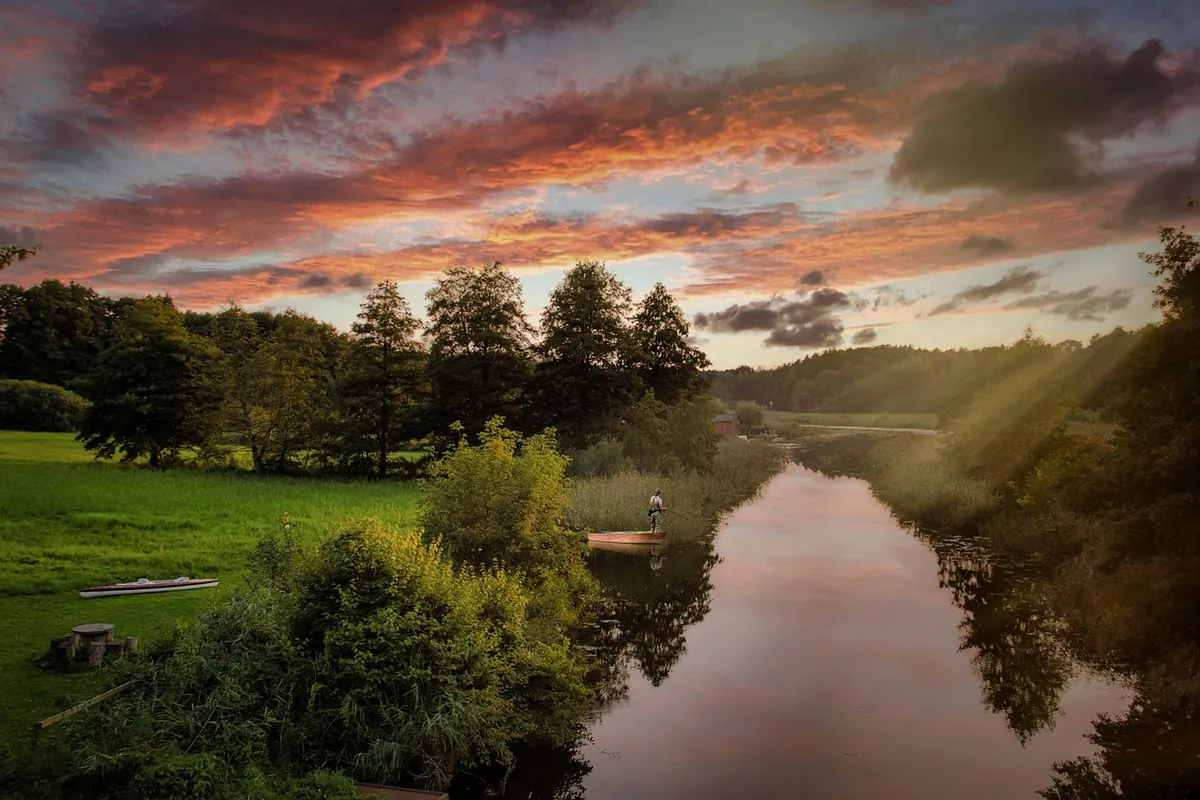
How to Create a Mini Brook Edge in a Wildlife Garden
A brook edge is the busiest strip of habitat in any garden. The shallow margin, the damp bank, the wet stone — that is where most of the life happens. You can copy it in a few square metres: a narrow channel of slow-moving water, a gravelly floor, a scatter of stones and a fringe of native plants. It takes a weekend to build and gives you something to watch every morning for years.
Choose the Spot Before You Lift a Spade
Sun for at least half the day is the first thing to look for. Most marginal plants flower better in light, and damselflies need warmth before they will fly. Avoid the drip line of large trees: roots make digging miserable, and fallen leaves will clog a small channel within days. Level ground makes the levels easier, though a gentle fall of even 10cm across three metres gives you useful options for gravity-fed flow.
Think about top-ups next. A channel this small loses water steadily to evaporation and splashing, so site it within reach of a water butt, or plan a buried hose from one. Keep it visible from a window or a bench, too. You will spot trouble earlier and enjoy it far more.
If your garden already contains a natural stream, ditch or field drain, do not simply dig into it. Altering a watercourse normally requires permission, and the sensible route is to ask your local authority or the Environment Agency before you touch it. A self-contained lined channel avoids the whole question.
Design a Brook, Not a Pond
Ponds are wide and still; brooks are narrow, shallow and moving. That difference is what makes them attractive to a different set of creatures, so resist the urge to dig a bowl and call it a stream.
- Length: two to five metres is plenty. Long and thin beats round and deep.
- Width: 30–60cm, narrowing and widening slightly as it goes.
- Depth: 5–8cm over the main run, with gravel riffles just 2–3cm deep.
- Shape: gentle S-bends rather than a straight trench. Water hurries at the bends and rests in the pools.
- Edges: never vertical. A gentle slope, or a shallow shelf of gravel, lets frogs, hedgehogs and beetles climb out.
Plan a sump at the lowest point — a buried crate or small water butt with a lid, filled with gravel, housing the pump. The hose runs from there, hidden under turf or gravel, back to the top of the channel, where the water spills out and starts again.
Lining, Levels and a Buried Edge
Use EPDM or butyl liner over a geotextile underlay; old carpet works as well. Dig the channel 15cm deeper than you want it to finish, so liner, sand and gravel do not eat your water depth. Leave plenty of slack — liner should sit in the shape rather than stretch across it.
The trick that makes a lined channel look natural is the buried edge. Dig a shallow lip 20–25cm wide on each side, lay the liner into it, then fold it back, turf it over and cover with soil, gravel and stones. Nothing black or shiny should be visible. Check your levels with a straight edge and a spirit level before you start filling. Moving gravel afterwards is easy; moving liner is not.
Stones Do the Work
A brook edge is really a stone habitat with water running through it. Mix sizes: pea gravel for the bed, 40–80mm cobbles for the riffles, and a few larger stones standing proud of the surface where insects can bask and birds can perch.
Leave gaps. Piles of stone with voids between them shelter caddis larvae, water beetles, small fish fry and the nymphs of damselflies. Set one flat stone half in and half out of the water as a drinking and bathing spot for birds, and a landing pad for bees.
Avoid soft limestone chippings if you want acid-loving marginal plants; a neutral or slightly limey mix suits most of the natives below. Whatever you use, rinse it well before it goes in.
Plant the Three Zones
Divide the edge into wet, marginal and damp bank, and plant each zone with natives that belong there. Plant into aquatic baskets, or straight into gravel in the shallows, and leave at least half the water surface open — these plants spread faster than you expect.
- Wet margin: brooklime, water forget-me-not, lesser spearwort, water mint.
- Shallow water: bogbean and water plantain, both vigorous, so keep them in baskets.
- Damp bank: marsh marigold, meadowsweet, water avens, ragged robin, lady's smock, soft rush.
- Shade: opposite-leaved golden saxifrage and marsh violet.
- Structure: tussock sedges and yellow flag iris, which needs thinning every couple of years.
Add a clump of moss to a wet stone. It looks like nothing for a month, then it looks as though it has always been there.
Keeping the Water Moving Safely
A small submersible pump is enough. Think in turnover rather than power: you want the channel's water cycling once or twice an hour, which for a run this size means a modest pump. Protect the intake with a mesh cage or nestle it in gravel so it neither clogs nor traps tadpoles.
Have any mains electrical work installed by a qualified electrician, on an RCD-protected outdoor supply. A solar pump avoids the wiring altogether, though it will slow on cloudy days — which, happily, suits a brook.
Keep the flow gentle. If the surface is white and churning, it is too fast for most wildlife and small creatures will be washed into the sump. Aim for a visible ripple and a quiet trickle over the stones. Top up with rainwater from a butt where you can; tap water brings nutrients and encourages algae. If you must use tap water, add it slowly and in small amounts.
A Year of Small Jobs
Autumn: net out leaves, or fit a guard over the sump. Winter: leave the pump running through mild spells, but switch it off in hard frost and let the channel rest. Never smash ice on a lined channel — you can puncture the liner. Float a ball or a bundle of twigs to keep a hole open, or pour warm water onto a floating object.
Spring: thin the vigorous plants, check the gravel has not silted solid, and top up the level. Summer: pull blanketweed by hand, keep all chemicals well away from the water, and leave the seedheads on ragged robin and meadowsweet for the birds.
If a newt or a frog turns up, count yourself lucky. If the channel turns green, cut back the nutrients rather than the plants.
Start With One Metre
A single metre of shallow channel, planted and stony, will teach you more than any book. Get the levels right, bury the liner properly, keep the flow slow and let the edges grow a little shaggy. Within a season you will have damselflies hunting along it, birds queuing for a bath, and a strip of garden that earns its keep.
Photo: fietzfotos / Pixabay