Beginner's Guide to Reading a Brook: Current, Depth and Cover
A brook is not a river in miniature. The current is quicker, the water often shallower, and the fish have far less room to spread out. That is good news for a beginner. Everything you need to know usually sits within a few metres of where you are standing. Once you can read current, depth and cover, you stop flogging water at random and start putting a fly or bait where a fish is genuinely sitting.
Start with the current, not the fish
Brook fish are lazy in a very specific way. They want food delivered to them, and they want to spend as little energy as possible collecting it. That means they hold in slow water right next to fast water, facing upstream, picking off whatever the current brings. Find the boundary between fast and slow and you have found the fish's front room.
Anglers call that boundary a seam. It is often visible as a line on the surface: one side broken and churning, the other smooth and glassy. On a bright day, polarised sunglasses make it much easier to spot, because they cut the glare and let you see the surface texture rather than a sheet of reflected sky.
Four current features are worth learning first:
- The seam. A slick band running through rougher water, usually marking the edge of a deeper channel or a change in the bed. Fish sit on the slow side of it.
- The cushion and boil. Water piles up in front of a boulder and swirls round behind it. The cushion itself is disturbed, but the pocket immediately behind the rock is calmer than you would expect and often holds a fish.
- The eddy line. Behind any obstruction — a log, a bridge footing, a stand of reeds — the flow curls back on itself. The line where the two directions meet collects debris and food, and fish patrol it.
- The chute. A narrow tongue of faster water squeezed between two rocks or two banks. It is shallow but well oxygenated, and fish often sit at the tail of it where the water slows and spreads.
Reading depth from the surface
You cannot see the bed of a tea-coloured brook, but the surface still tells you things. Fast, shallow water over gravel looks busy and broken. Deeper water tends to look smoother, darker and slightly glassy, because the flow is cushioned by more water beneath it. A patch that looks flatter and darker than its surroundings is usually a pocket.
Look for colour changes too. A sudden step from pale gravel to a dark green or brown tone often marks a drop of half a metre or so. That is plenty on a brook. A pocket the size of a dustbin lid can hold a decent brown trout if there is cover nearby.
Pools are the obvious deep spots, and beginners tend to fish them from top to bottom. Resist that. The head of a pool, where the riffle spills in, and the tail, where it shallows out again, are usually more productive than the middle. Work the tail first, quietly, from downstream.
Cover: what fish actually use
Cover is anything that breaks the fish's outline or gives it shade. On a small brook it does not need to be dramatic. A single brick-sized stone on an otherwise bare gravel run is a landmark, because it is the only thing there. If you can see it, so can a fish.
The reliable types of cover are:
- Undercut banks. The outside of a bend is usually deepest, and the bank above it is often hollowed out. Fish tuck right underneath.
- Roots and trailing branches. Alder roots and low branches dipping into the water give shade and shelter in one package.
- Boulders and ledges. Anything that pushes the current aside also creates a pocket behind it.
- Overhanging grass and shadow. Even a metre of bank with long grass above it casts enough shade to hold fish on a sunny afternoon.
- Man-made cover. Old walls, bridge footings and stone revetments behave like rock ledges and are often overlooked.
Where two types of cover meet, the spot is usually better than either on its own. A boulder sitting under an overhanging branch, or a deep pocket at the foot of an undercut bank, is worth several careful casts.
A routine you can repeat on any stretch
- Stop well back from the water and watch for a minute. Look for seams, dark patches and shade before you move.
- Fish the nearest likely spot first, from downstream, without wading into it.
- Cover the edges of a lie before the middle — fish on the edge are the ones you spook first.
- Work upstream, a few steps at a time, so you approach fish from behind.
- Only wade when you must, and never through water you intend to fish.
- Mark in your memory the spots that produced takes. They will produce again.
If you can see the fish, it has probably already seen you. Read the water instead.
The brook changes, so change with it
After rain, brooks rise fast and colour up. Fish move out of the main flow into slack water behind banks and bends, and they are often less cautious because visibility is poor. In low summer conditions the same fish become skittish and sit tighter to cover, so a lighter approach and a lower profile matter more than any change of fly or bait.
Time of day does a lot of the work for you. Early mornings and late evenings put good light across the water and bring fish out of the deepest shade. On hot afternoons, fish the shaded bank rather than the sunny one, even if the sunny side looks more inviting to you.
Practise on water you already know
Pick one stretch of about fifty metres and fish it in different conditions through the season. You will learn more from that than from visiting a new brook every week. Take a notebook, or use your phone, and jot down where you saw a fish move, where you got a take and what the water was doing at the time.
Keep your approach quiet, keep low, keep your shadow off the water, and make sure you have the right rod licence and permission for the water you are fishing. Reading a brook is a slow skill, but it compounds. After a dozen trips you will walk past water you used to fish and wonder why you ever bothered with it.
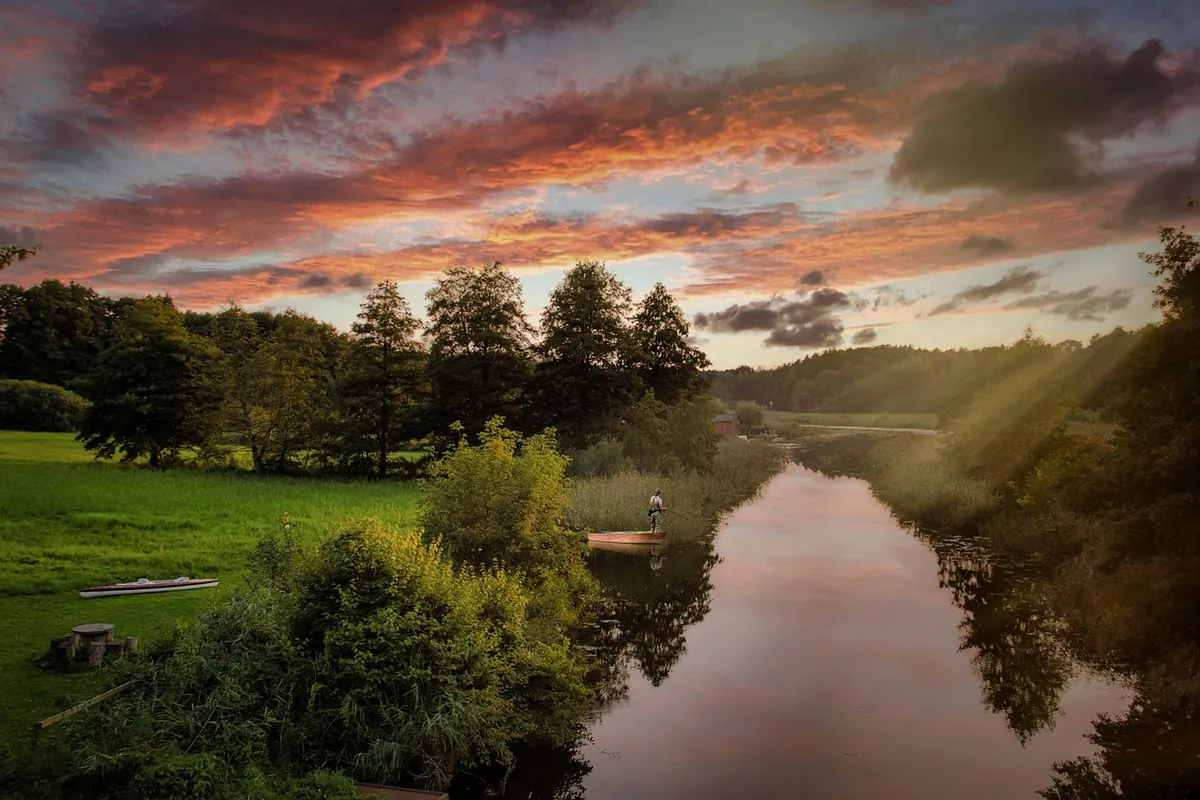
Photo: guvo59 / Pixabay